
What to look for in a road bike rental comes down to twelve questions, and the first four decide most of the outcome: how old is the bike, what groupset and gearing does it run, what size and geometry is it, and what happens if it breaks halfway through a ride. A rental that answers those clearly, in writing, before you pay, is usually a rental that has thought about the rest.
This checklist works anywhere, whether you are renting in Mallorca, Girona, the Alps or the Algarve. Ask every question below before you book, not at the counter, and compare the answers rather than the headline daily rate.
Key Takeaways
- Ask for the model year, not the model name. A frame name can stay the same for five seasons while the bike under it gets older.
- Check the gearing against your terrain. For long climbs, a compact 50/34 chainset with an 11-32 or 11-34 cassette is the combination to ask for.
- Find out exactly what the fit covers. Saddle height, setback and pedals are standard; changing handlebar reach or height is not offered by most rental operators.
- Ask what happens at 60 km from base with a snapped chain. The answer tells you more about the operator than any photo of the fleet.
- Compare the total cost, including delivery, pedals, deposit and damage cover, rather than the daily rate on its own.
The Road Bike Rental Checklist
1. Fleet age: ask for the model year
The single most useful question, and the one operators are least likely to volunteer an answer to. Bike names persist across generations, so “we run the Model X” can mean last season’s bike or one that has done four summers of rentals. Ask for the model year, and ask how often the fleet is replaced. A rental bike covers a lot of kilometres in a season, and wear on bearings, cables and drivetrain accumulates faster than on a privately owned bike. It is the reason every bike at Velo Algarve is renewed every season.
2. Groupset: name the tier
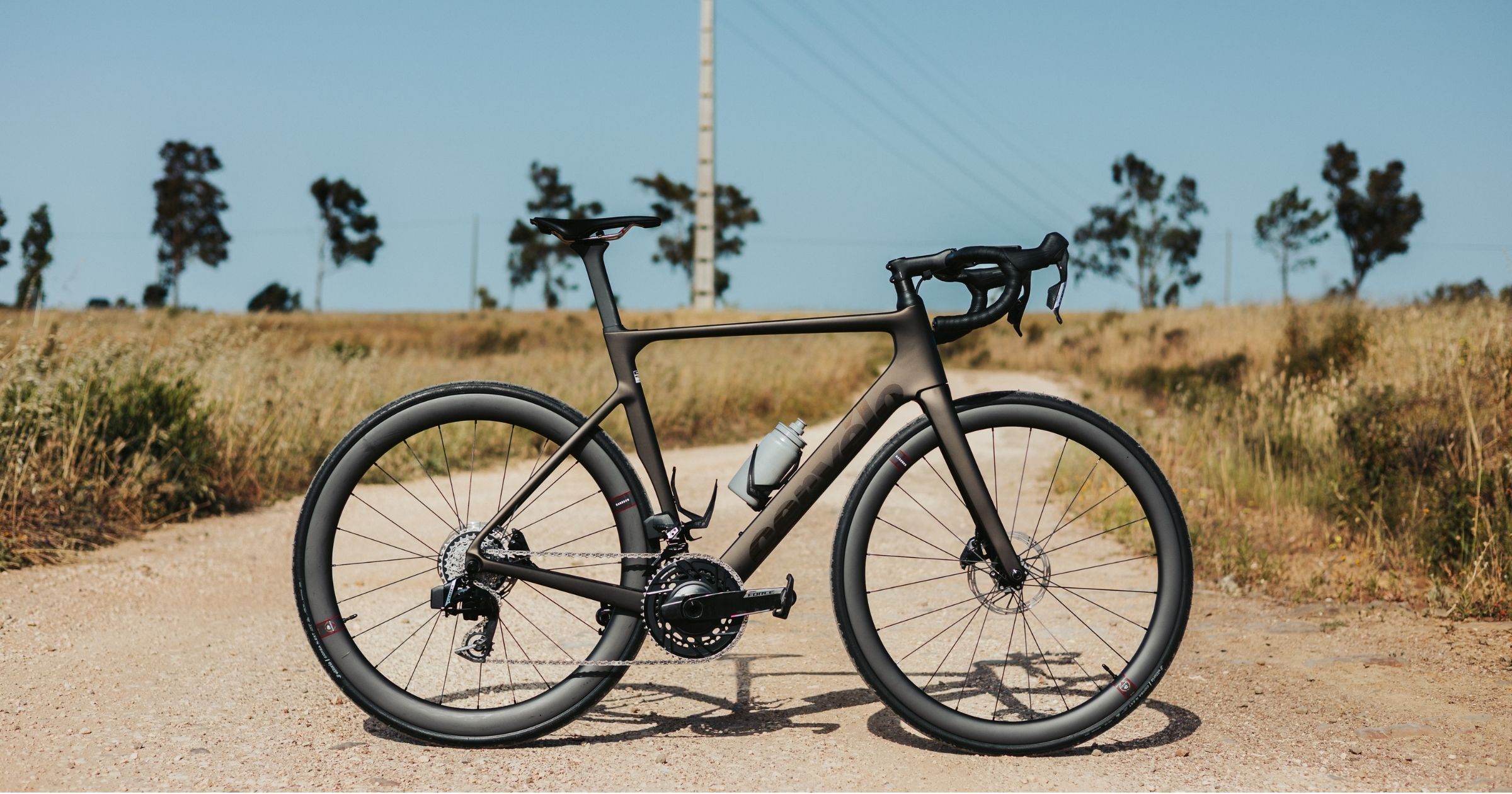
“High-end components” tells you nothing. Ask for the groupset by name. On Shimano, the road tiers run 105, Ultegra and Dura-Ace; on SRAM, Rival, Force and Red. Electronic shifting, such as Shimano Di2 or SRAM AXS, is worth preferring on a rental because it removes cable stretch and indexing drift, the most common cause of a bike that shifted well on day one and badly by day four. It is why our whole fleet runs SRAM Force AXS.
3. Gearing: match it to the terrain
Separate from the groupset, and more important if the area is hilly. A compact 50/34 chainset with an 11-32 or 11-34 cassette gives you low enough gears for sustained climbing without losing much at the top end. A race setup with a 53/39 and an 11-28 can turn a manageable climb into a grind. For context, the Foia climb in the Algarve averages 5.9% over 7.3 km, and the right gearing on that is the difference between a steady effort and a long hour.
4. Brakes: hydraulic disc as the baseline
Hydraulic disc brakes are now standard on current road bikes, and they are the thing to ask for on any descent-heavy route, particularly in the wet. Ask whether pads and rotors are checked between rentals. A squeal or a soft lever at the handover is worth raising before you ride away, not after the first descent.
5. Frame size and geometry: ask for the chart
Give the operator your height and inseam, then ask which frame size they would put you on and whether they can share the geometry chart. If you know the stack and reach figures of your own bike, compare them. A bike one size wrong can be ridden for a day. It is a poor companion for a week.
6. Fit: find out exactly what is adjusted
This is where expectations and reality most often part company. Almost every rental will set saddle height, and a good one will also set saddle setback and fit your pedals. Changing handlebar reach or height usually means swapping the stem or rerouting internal cables, which most operators do not offer on a rental bike. Ask precisely what they will set, and if you ride a very particular front-end position, say so before booking so you know what is arriving. We set saddle height, setback, pedals and tyre pressure at delivery, and we would rather tell you now that the bar and stem stay as built.
7. Tyres: width, type and condition
Ask the tyre width and whether the bike runs tubeless or inner tubes. Widths of 28 mm and above are now common on road bikes and give noticeably more comfort and grip on imperfect surfaces. Check the tread at the handover for cuts and flat spots, since a worn tyre is the most likely cause of a puncture on day two.
8. Pedals and shoes: confirm the system
Ask which pedal systems are available, usually Shimano SPD-SL or Look Keo for road, and whether pedals are included or charged extra. If you are bringing your own shoes, confirm your cleats match. If you are bringing your own pedals, check the operator is happy to fit them.
9. What is included: the saddle bag test
Ask what comes with the bike. At minimum you want a spare tube, tyre levers, a pump or CO2 and a multitool. Better operators include bottles, a GPS unit with routes, lights and something to eat. Open the saddle bag at handover and check it is actually stocked, because an empty saddle bag at 40 km from anywhere is a long walk.
10. Deposit, damage and insurance: read the small print
Ask whether there is a deposit, how much, and how it is taken. Ask whether a damage waiver is offered and what it excludes, since many do not cover theft or crash damage in full. Separately, check your own travel insurance covers cycling and third-party liability, because standard policies often exclude sporting activities unless you add cover.
11. Support: what happens if it breaks mid-ride
Ask this directly: “If I snap a chain 60 km from here, what happens?” A shop-based rental may only help during opening hours and only if you can get the bike back. A better answer involves a phone or messaging line that is staffed while you are riding, and a clear plan for a repair or a replacement bike. Ours is a WhatsApp line that runs for the whole rental rather than shop hours, and the detail is on our frequently asked questions page.
12. Collection and return: count the hours
Pickup and return sound like admin, but they cost riding time. A counter-based rental means collecting the bike on day one and returning it before your flight, often during shop hours that clash with both. Delivery and collection to your accommodation removes that, and on a short trip it can give you back most of a riding day. It is the main reason we deliver to the door rather than run a counter.
Red Flags Worth Walking Away From
A few answers suggest the rest of the rental will not be much better. An operator that cannot tell you the model year. A groupset described only as “quality components”. No answer to the mid-ride breakdown question beyond “bring it back to the shop”. A deposit or damage policy that is not written down anywhere you can read before paying. And photographs of the fleet that look noticeably newer than the bike wheeled out at handover.
Frequently Asked Questions
What should I look for in a road bike rental?
Start with fleet age, groupset, gearing and frame size, then check brakes, tyres, pedals, what is included, deposit and damage terms, mid-ride support and how collection works. Ask each question before booking, get the answers in writing, and compare total cost rather than the headline daily rate.
How old should a rental road bike be?
Ideally no more than a season or two, and the only way to know is to ask for the model year rather than the model name. Rental bikes cover high mileage quickly, so bearings, cables and drivetrains wear faster than on a privately owned bike. An operator that replaces its fleet regularly will usually say so.
What gearing do I need on a rental bike for climbing?
A compact 50/34 chainset with an 11-32 or 11-34 cassette suits most riders on sustained climbs. A race setup with a 53/39 chainset and an 11-28 cassette is harder work on long gradients. Ask for the exact chainset and cassette when you book rather than assuming the groupset name tells you.
Can a rental bike be fitted to me?
Partly. Most rentals set saddle height, and better ones also set saddle setback and fit your pedals. Changing handlebar reach or height usually requires a different stem or rerouting internal cables, which most operators do not offer. Ask exactly what will be adjusted, and flag any unusual position before you book.
Do I need insurance to rent a road bike?
Check two things. Ask the operator about deposits and whether a damage waiver is offered, and what it excludes. Then check your own travel insurance covers cycling and third-party liability, since many standard policies exclude sporting activities unless you add specific cover before you travel.
Book a Bike
Use the checklist on any rental you are considering, including ours. If the answers above suit the trip you have planned, book a bike here and it will be delivered to your door, fitted and ready, before your first ride.
No Comments