

The best seafood restaurants in the Algarve, Portugal are the ones sitting closest to a working fishing port, which is why Olhão, Salema and Vila do Bispo consistently out-cook the resort strips. Order cataplana if you want the region’s signature dish, grilled sardines at any time of year and especially between June and August when they are at their fattest, and percebes if you want the thing most visitors never try. Expect €14-18 for a whole grilled sea bream and around €25 for arroz de marisco for two.
Key Takeaways
- Sardines are on menus year-round and are at their best from June to August, when the fish carry the most fat and the charcoal grills come out across the coast.
- Percebes, goose barnacles, sell for €15-20 per kilo direct from harvesters on the west coast and €40-100 per kilo in restaurants, a gap that reflects how dangerous they are to collect.
- Olhão’s fish market opens around 7am and peaks between 7 and 10am, and sardines there can go for as little as €4 per kilo.
- The Algarve farms its own oysters in the Ria de Alvor at Vale da Lama just outside Lagos, in A-class water, and they can be bought direct from the producer for around €6 a dozen.
- Xarém com conquilhas, a corn porridge with cockles, is a genuinely eastern Algarve dish you will not find on menus in Albufeira or Lagos.
- Fish is normally sold by weight. A whole sea bream or bass runs €14-18, and a seafood rice for two around €25.
What to Order in an Algarve Seafood Restaurant
Cataplana de marisco
The dish the region is named for, more or less. A cataplana is the hinged copper pot itself, clamped shut so the contents steam in their own liquid, and the stew inside is usually clams, prawns, squid, white fish, chorizo, peppers, tomato and onion. It should arrive sealed and be opened at your table, releasing the steam in front of you. If it comes out already plated, the kitchen has skipped the point of the dish. Portions are built for two and cost €25-30 at most traditional restaurants.
Grilled sardines
Sardinhas assadas turn up on menus across the Algarve all year, and they are worth ordering whenever you fancy them. Summer is when they are at their best: the fish carry the most fat from June through August, which is exactly when they grill well over charcoal, skin blistering, served plainly with boiled potatoes, peppers and salad. Portimão holds a sardine festival each August built entirely around them. Outside those months you are more likely to be eating frozen fish, which is perfectly good grilled and still worth having, just a different thing from a July sardine straight off the boats.
Percebes
Goose barnacles, and the strangest thing on any Algarve menu. They grow clamped to rocks in the surf zone on the exposed west coast, which means harvesting them involves climbing down onto wet boulders and timing the waves. That risk is the price. Percebeiros sell them for roughly €15-20 per kilo on the coast, and restaurants charge €40-100 per kilo depending on season and size. You grip the shell, twist off the leathery skin, and eat the stalk inside. Expect a squirt of seawater on the first one. Most restaurants will serve a 100g portion if you want to try them without committing.
Polvo à lagareiro
Octopus, slow-roasted with garlic and a genuinely excessive amount of olive oil, served with batatas a murro, potatoes smashed flat with a fist. Santa Luzia near Tavira calls itself the octopus capital of Portugal and treats the ingredient more seriously than anywhere else in the region, though good versions turn up across the whole coast.
Arroz de marisco
Seafood rice, served wet and soupy rather than dry like a paella, in a deep pot for the table to share. Around €25 for two at a straightforward marisqueira. It is the dish to order when a group cannot agree, since it arrives as one thing everyone eats from.
Oysters from the Alvor lagoon
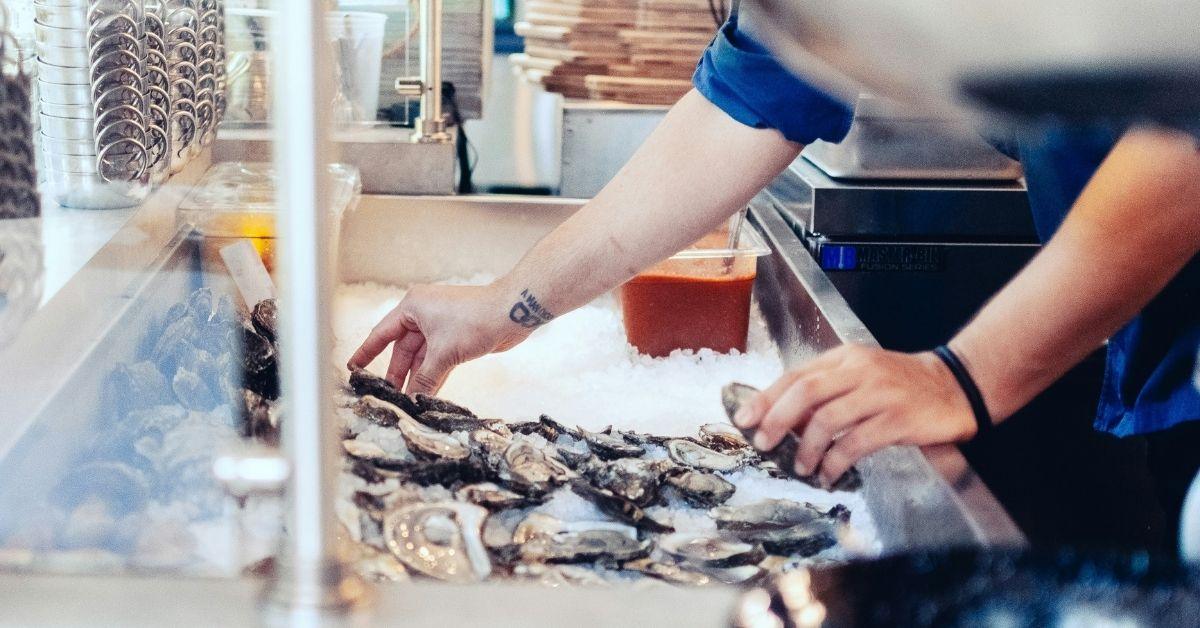
Most visitors have no idea the Algarve grows its own, but there are oyster farms in the Ria de Alvor at Vale da Lama, on the edge of Odiáxere just outside Lagos. Ostra Select has worked the site since 2000 across roughly five hectares, and the lagoon is classified A-class water, meaning the oysters need no purification before they reach a plate. They also grow through the winter here rather than going dormant the way they do in colder regions, so the season runs year-round.
Buying direct from the producer is the cheapest oysters get anywhere: roughly €6 a dozen at the farm gate, against several times that in a restaurant. Most of the harvest now stays in the Algarve rather than being exported, so oyster bars around Lagos and Alvor are usually serving something landed a few kilometres away that morning.
Conquilhas and xarém
Conquilhas are small local clams, usually done à Bulhão Pato with garlic, coriander and white wine, and eaten with bread to mop the pan. Xarém com conquilhas pairs those clams with a corn porridge, and it is worth ordering specifically because it stays local: you will find it around Olhão and the eastern Algarve and almost nowhere on the tourist strips further west.
The fishing towns worth eating in are rarely the ones worth staying in, which makes a bike genuinely useful here. Velo Algarve delivers road bikes directly to your accommodation anywhere in the region, and the flat coastal road east from Tavira to Santa Luzia, or the run out to Salema from Lagos, turns a lunch reservation into the reason for the ride.
Where to Eat It
Casa Lourenço, Salema
A family restaurant in the fishing village of Salema, west of Lagos, where the kitchen has been run by the same chef for over thirty years and her son hand-picks the catch at the Sagres fish market several times a week. There is an outdoor terrace with a tank of live shellfish and a small indoor room. Other restaurants in Salema have the sea view. This one has the fish.
Marisqueira Rui, Silves
Inland, roughly 16 kilometres from the coast, and still one of the most recommended seafood restaurants in the region, which tells you something about how the Algarve actually works. Staff will do a 100g portion of percebes so you can taste them without ordering a full plate. Book ahead, since there is often a queue outside at dinner.
Café Correia, Vila do Bispo
The stop near Sagres for percebes and plainly grilled fish, in a village most people drive through on the way to the Cape. Rustic, unfussy, and the closest kitchen to where the barnacles are actually harvested.
The Olhão fish market, upstairs
Not a restaurant so much as a canteen on the upper floor of the market building, serving grilled fish and salads on paper plates at steel tables, mostly to fish vendors on their break. A plate of grilled sardines with salad and a beer costs around €8. It opens early and closes by 2pm.
Casa do Polvo Tasquinha, Santa Luzia
Octopus prepared a dozen ways in the village that built its economy on it, on the water east of Tavira. Michelin Guide listed rather than starred, open Wednesday to Monday over a narrow midday service, and busy enough that a reservation is sensible. More on this and the surrounding area in our guide to the best restaurants Tavira Algarve.
Read the Market Before You Book the Table
The most reliable way to choose a seafood restaurant here is to walk through a fish market first, and Olhão’s is the biggest in the Algarve. It opens around 7am and the serious trade happens between 7 and 10am, when boats moored directly behind the building unload. If the slabs are stacked with bright, firm sardines, book a simple grill for that evening and order them. If they are small and scarce that morning, octopus, clams or whatever else is piled high is the better bet for the same money.
The same logic applies to the whole coast. Portimão, Loulé and Faro all run proper municipal markets, and prices there tell you what is genuinely in season: sardines at €4 a kilo in July mean the boats are landing them in volume. For the wider question of separating a working local restaurant from one built for passing footfall, our guide on best local restaurants Algarve avoid tourist traps covers the checks worth running before you sit down.
Frequently Asked Questions
What do you need to know about seafood restaurants in the Algarve before you go?
Fish is sold by weight in most places, so a whole grilled bream or bass runs €14-18 rather than a fixed menu price. Seasonality is worth knowing: sardines are on menus year-round but at their fattest and freshest from June to August. The best kitchens sit near working fishing ports, not on the resort strips.
Are percebes worth trying, and what do they cost?
Yes, if you want the most distinctly Atlantic thing on the menu. Restaurants charge €40-100 per kilo depending on season and size, well above the €15-20 per kilo harvesters get on the coast. Many places serve a 100g portion, which is enough to taste them without a large bill.
Are there fresh oysters in the Algarve?
Yes, and they are farmed locally rather than imported. The Ria de Alvor at Vale da Lama, just outside Lagos near Odiáxere, produces oysters in A-class water that needs no purification stage. Buying direct from the producer costs around €6 a dozen, and most of the harvest is now served in the Algarve rather than exported.
Where is the best fish market in the Algarve?
Olhão has the largest and busiest, on Avenida 5 de Outubro next to the working harbour. It opens around 7am with the best trade between 7 and 10am, and Saturday mornings are the busiest. Portimão, Loulé and Faro also run substantial municipal markets worth walking through.
When is the best time of year for seafood in the Algarve?
Summer, particularly June to August, when sardines are at their fattest and the widest range of shellfish is landing. Octopus, squid and clams are served year-round. Percebes are at their largest and best from roughly October through March, when Atlantic water is coldest.
Taste the Ocean
The seafood worth travelling for sits in the fishing towns rather than the resorts, which usually means getting yourself a few kilometres down the coast. See delivery areas across the Algarve for where we drop bikes, or book a bike here and ride to lunch. For more on eating well town by town, our guides to the best restaurants Lagos Algarve and the best restaurants Tavira Algarve cover both ends of the coast.
No Comments