

The Rider’s Library
Sixteen guides. Booking to the last climb.
The bike, the roads, and the country around them. Everything worth knowing before you land.
The Service and Your Bike
Before You Fly
The Riding
Off the Bike
- How to Order Coffee in Portugal
- How to Shop at a Portuguese Grocery Store
- What to Eat Before a Big Day on the BikeYou are here
- Eating for Performance in Portugal
What to eat before a long cycling ride is simpler than the internet makes it: granola or oats with almond milk, a banana, and a coffee, roughly two hours before you leave. The science says 1 to 4 grams of carbohydrate per kilogram of body weight, 1 to 4 hours out, and a bowl of granola with fruit lands squarely inside that without needing a kitchen scale or a specialist shop.
The rest of this is written for riding in Portugal specifically, because the food available here is different from what most visiting riders are used to. Everything below comes from a Pingo Doce, a Continente, a village cafe or a petrol station. No powders, no planning apps.
Table of Contents
Key Takeaways
- Granola or oats with almond milk and a banana, two hours before, covers the pre-ride meal for most riders on most days.
- The science is 1 to 4 grams of carbohydrate per kg of body weight, 1 to 4 hours before riding, per American College of Sports Medicine guidance cited by TrainingPeaks.
- Mid-ride, a cafe stop with a pastel de nata and a Coke does the job, and every cafe in Portugal has both.
- Haribo is the pocket staple that beats chocolate in Algarve heat, since it does not melt at 30 degrees the way a Snickers does.
- The night before matters more than the morning of. Brad’s default is pasta, with some protein and fibre alongside it.
- Italian restaurants and gelaterias are everywhere in the Algarve, so carbohydrate is never hard to find, and dessert the night before is part of the plan rather than a lapse.
The Night Before: Where the Ride Is Actually Won
Muscle glycogen replenishment takes up to 24 hours, which means the big day you are fuelling on Saturday was largely decided by Friday’s dinner. No breakfast rescues an empty tank, no matter how good it is.
Brad’s default the night before a big one is pasta, and there is no need to overthink it beyond that. What matters is not eating pasta and nothing else. Put some protein alongside it, chicken, tuna, eggs, whatever is in the fridge, and some vegetables or salad for fibre. The protein supports overnight recovery from whatever you rode that day, and the fibre keeps digestion working normally, which matters more than it sounds when you are eating a lot of carbohydrate in a short window.
Eating out instead of cooking, the Algarve makes this easy. Almost every tasca does arroz de something, and Portuguese rice portions are not small. Grilled fish with rice and salad is close to a textbook pre-ride dinner and it is on every menu in the region. The one to be careful with is a full seafood cataplana the night before a climbing day, which is excellent and heavier than it looks.
Italian restaurants sit alongside the Portuguese ones in every town along this coast, which means pizza and pasta are never more than a few streets away wherever you are staying. Between the two cuisines, finding enough carbohydrate for a pre-ride dinner in the Algarve is close to impossible to get wrong.
Gelato is just as widespread, and there is no reason to skip it the night before a big day. It is fast-absorbing carbohydrate with a bit of protein attached, eaten at exactly the point in the evening when topping up glycogen is useful rather than a problem. Dessert the night before a long ride is not a lapse in discipline, it is part of the plan.
The one caveat is timing. Fibre is useful at dinner the night before and unhelpful at breakfast on the morning of, for the same reason: it slows things down.
For the wider question of what to order once you are sitting down, eating for performance in Portugal covers the menu and the fact that dinner here often starts at nine.
Breakfast: The Easy Version
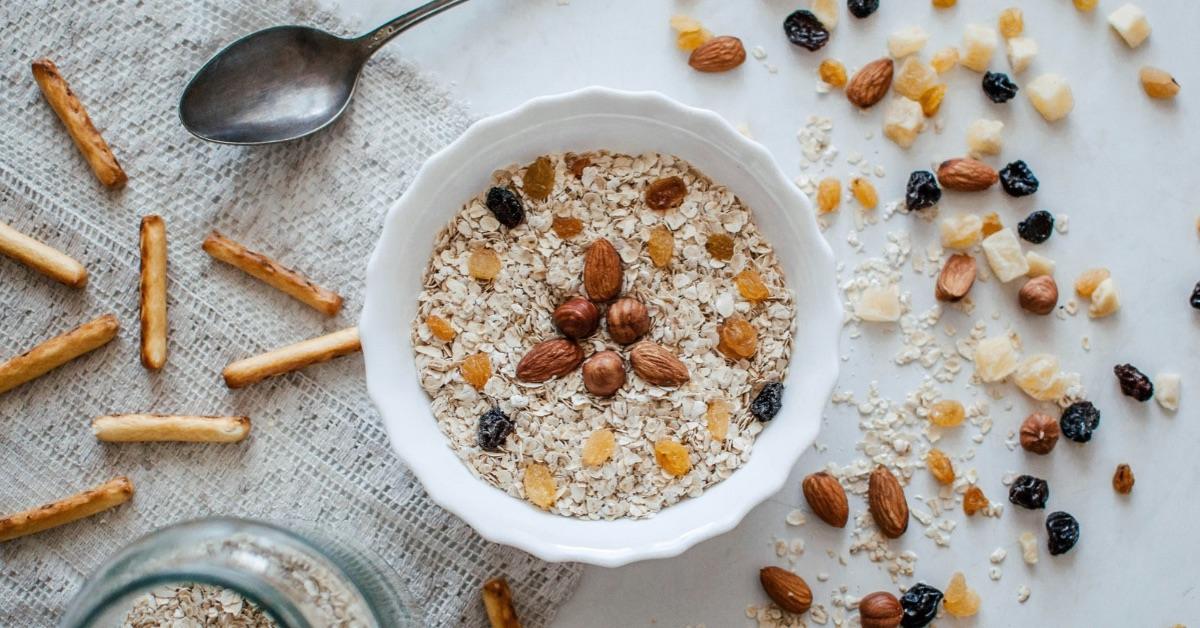
Granola or oats with almond milk, a sliced banana, and honey if you want it. That is the whole recommendation. It takes two minutes, every supermarket in the Algarve sells all four items, and it puts you comfortably in the right range for a long day.
Some practical notes on making it work:
- Granola is quicker, oats are cheaper and easier on the stomach. Instant oats with hot water work fine if the accommodation has a kettle and nothing else.
- Almond milk sits lighter than dairy for a lot of riders and keeps without a fridge until opened, which matters in a villa kitchen you did not stock.
- Banana on top does two jobs: quick carbohydrate now, and a second one in your pocket for the first hour of the ride.
- Aim for roughly two hours before departure. If you are down to an hour, halve the portion and skip anything with much fat or fibre in it.
- Portuguese supermarkets stock local honey and dried figs, both of which belong on top of a bowl of oats and both of which are properly Algarve.
How much, and how long before
The 1 to 4 grams per kilogram range is wide because it scales with how much time you have. The more warning your stomach gets, the more it can take on:
- Three hours out: 2 to 3 g per kg. For a 70 kg rider, 140 to 210 g. The full breakfast, and what to use before a Fóia day.
- Two hours out: 1 to 2 g per kg, so 70 to 140 g for that rider. A large bowl of granola with fruit and honey lands here.
- One hour out: around 1 g per kg, low fat and low fibre. Toast with jam, a banana, a bowl of white rice.
- Thirty minutes or less: 15 to 30 g of quick carbohydrate. A banana, a gel, a sports drink. Not a meal.
Ordering breakfast in a Portuguese cafe
If you are eating out rather than at the accommodation, the vocabulary matters more than the menu. Order torrada, thick-cut toast with butter, and expect a bigger portion than the word toast suggests. Pão com doce, bread with jam, does the same job with less fat. A tosta mista adds cheese and ham if you have three hours before you ride rather than one.
To drink, sumo de laranja natural is fresh orange juice squeezed to order, a useful 20 to 25 grams of quick carbohydrate, and every cafe in the country makes it. For coffee, a bica is an espresso, a meia de leite is roughly a flat white, and a galão is a tall milky coffee served in a glass. If you want volume rather than a shot, ask for a galão. The full vocabulary is in how to order coffee in Portugal.
The thing to skip at 6am is the pastel de nata. It is about 25 grams of carbohydrate wrapped in a lot of pastry fat, which makes it a poor foundation for a climbing day. Hold that thought, though, because it comes into its own later.
When the Hotel Breakfast Starts Too Late
This is the practical problem on almost every training camp, and it deserves saying out loud.
Hotel breakfast in the Algarve commonly starts between 7:30 and 8:30. If you want to be riding at 8:00 to beat the summer heat or the afternoon wind, the arithmetic does not work: you cannot eat two hours before an 8am start at a breakfast that opens at 7:30.
Three workable answers:
- Eat the night before and top up in the morning. A larger carbohydrate dinner, something small and quick at 7am, then eat properly on the bike from the first hour.
- Self-cater. Granola, almond milk, bananas and honey from the supermarket, made in the apartment at 5:30. Shopping for a week of riding covers the shop.
- Shift the ride. Eat at 8:00, roll out at 10:00, accept a warmer afternoon. Viable in March, less so in July.
Ask your accommodation whether they will do an early breakfast or leave something out. Plenty in the Algarve will, particularly hotels used to cycling groups. Worth asking before you arrive rather than on the morning.
On the Bike: What to Actually Buy in Portugal
Pre-ride eating buys you the first 75 minutes or so. Past that, rides need topping up at roughly 30 to 60 grams of carbohydrate per hour, starting within the first 20 minutes rather than when you feel hungry. That upper limit exists because most people absorb around 1 gram of carbohydrate per minute.
The good news is that Portugal solves this without any specialist product:
- Pastel de nata and a Coke – around 25 g and 35 g of carbohydrate respectively, available in every cafe in the country. The nata that was wrong at 6am is exactly right at 60 km.
- Haribo – the pocket staple, and better than chocolate in Algarve heat because it does not melt at 30 degrees. Every supermarket and petrol station stocks it.
- Bolo de arroz – the dry, muffin-shaped rice cake on every cafe counter. It travels in a jersey pocket without turning into a paste, which most Portuguese pastries do not.
- Snickers and a Coke from a petrol station – roughly 35 g in the bar and 35 g in the can, with salt and caffeine alongside. A legitimate refuel, though it belongs in the bidon cage rather than a back pocket in July.
- Compal – the Portuguese fruit juice carton in every cafe fridge and petrol station, useful when you want liquid carbohydrate rather than another bar.
- Dried figs and almonds – the Algarve’s own ride food, sold everywhere from village shops to roadside stalls, and a good pocket option on a long day.
Carry gels regardless of what the route promises. The reason is geography rather than nutrition: on the inland roads north of Lagos and out on the Costa Vicentina toward Sagres, cafes sit 20 to 40 km apart and some close on Mondays and Tuesdays. Two or three gels in a jersey pocket cover the gap between a plan and what actually happens. Every Velo Algarve rental goes out with a stocked saddle bag for exactly that reason, and we sell gels and drink mix if you would rather not carry a week’s worth from home.
Heat and Fluid: The Algarve Variable
The food side barely changes between a cold morning in Belgium and a warm one in Lagos. The fluid side changes a lot. TrainingPeaks works through an example of an 80 kg rider with a sweat rate around 1.4 litres per hour in mid-summer conditions, and while individual rates vary widely, it gives a sense of the scale.
Two things follow. Drink with your breakfast rather than gulping something at the door, since fluid taken a couple of hours out actually gets absorbed. And treat every cafe and petrol station on a summer route as a bottle stop whether or not you want anything to eat, because the next one may be 30 km away. Água das Pedras, the Portuguese sparkling mineral water, is in every cafe fridge and carries enough mineral content to be more useful than plain water on a hot day.
The full picture on sweat rates, sodium and where the refill points actually are is in riding in heat: hydration planning for the Algarve.
Frequently Asked Questions
What do you need to know about what to eat before a long cycling ride before you go?
Eat granola or oats with almond milk and a banana about two hours before, which lands inside the guideline of 1 to 4 grams of carbohydrate per kg of body weight. Fuel properly the night before, avoid fat and fibre at breakfast, carry gels, and plan cafe or petrol station stops into longer routes.
What should I buy in a Portuguese supermarket for a cycling trip?
Granola or oats, almond milk, bananas, honey and Haribo covers almost everything. Pingo Doce and Continente stock all of it, plus local dried figs and almonds that work well as pocket food. Haribo beats chocolate in summer because it does not melt in a jersey pocket at 30 degrees.
Can I just eat a pastel de nata and a Coke mid-ride?
Yes, and it works well. A nata delivers around 25 grams of carbohydrate and a Coke roughly 35, which together sit inside the 30 to 60 grams per hour most riders need on a long day. It is a poor pre-ride breakfast but a good mid-ride stop.
What should I order for breakfast in a Portuguese cafe before riding?
Torrada with butter or pão com doce, plus a sumo de laranja natural. Bread is the most reliable carbohydrate in any Portuguese cafe. For coffee, a bica is an espresso and a galão is a tall milky coffee served in a glass, which is the option to ask for if you want volume.
What should I eat the night before a big ride?
Pasta is the reliable default, with protein and some vegetables or salad alongside it. The Algarve has Italian restaurants alongside Portuguese ones in every town, so pizza, pasta or grilled fish with rice all work. Glycogen replenishment takes up to 24 hours, so the night before matters more than the morning of.
Should I have dessert the night before a long ride?
Yes. Gelato is widely available across the Algarve and is fast-absorbing carbohydrate with a little protein attached, eaten at the point in the evening when topping up muscle glycogen is useful. Skipping dessert the night before a big day makes the ride harder, not easier.
Fuel Your Ride
Get the night before right, keep breakfast simple, and treat every cafe as a fuel stop rather than a photo opportunity. Every rental from us arrives with a stocked saddle bag and the routes preloaded so you know where the stops are before you set off. More on what comes with a rental on our frequently asked questions page, and delivery covers the whole region, listed on the delivery locations page.
Fuel Your Ride: book a bike here and have it delivered to your door, fitted and ready, with the saddle bag already packed.
General guidance drawn from published sports nutrition practice, not personal medical advice. Gut tolerance varies widely between riders. Anyone with a medical condition or specific dietary needs should speak to a qualified sports dietitian or doctor, and never try something new on the morning of your hardest day.
No Comments