

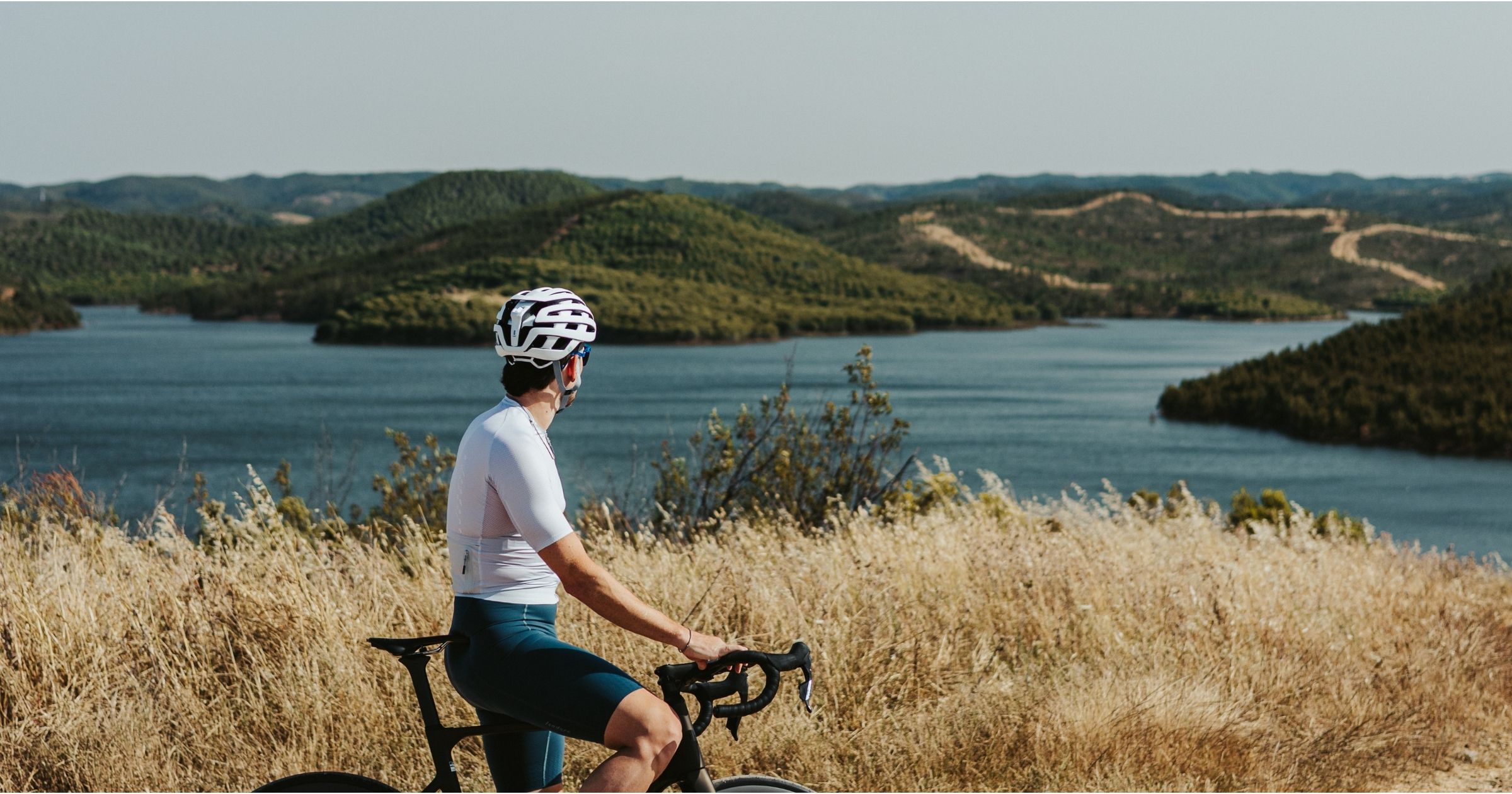
Cycling Cape St Vincent, Portugal means riding to the cliffs six kilometres past Sagres, the westernmost point of mainland Europe. Most riders reach it from Lagos, a route of roughly 40 kilometres each way with 350 to 500 metres of climbing depending on which roads you take. Wind, not gradient, is what actually shapes this ride. The final stretch out to the lighthouse is flat and exposed, and an afternoon north-westerly can turn an easy spin into hard work in a matter of minutes.
Key Takeaways
- Lagos to Sagres runs 33-43 km depending on the road you choose, with the coastal villages route through Luz, Burgau and Salema adding distance but cutting out traffic.
- Sagres to the Cape St Vincent lighthouse is a flat, direct 6 km with a free car park and no meaningful climbing.
- The cliffs at the Cape stand 75-80 metres above the Atlantic and are unfenced, so treat the wind and the edge with real respect.
- The lighthouse courtyard, museum, restaurant and shop have been closed since June 2026 for operational issues. The cliffs and headland remain open 24 hours, free, with independent food stalls still trading outside the walls.
- Start early. The north-westerly that builds through the Algarve afternoon is strongest in exactly the exposed final kilometres where you want it least.
Getting to Cape St Vincent by Bike
There are two honest ways to ride out from Lagos, and which one you pick changes the day. The coastal option runs through Praia da Luz, Burgau and Salema on lanes that stay close to the sea, with short sharp ramps between the villages and almost no traffic once you clear Lagos itself. The direct option follows the N125 west and drops onto the N268 south through Vila do Bispo, faster and flatter but busier, especially where it funnels traffic into Sagres.
Distances vary depending on which of the two you ride and which villages you detour through, but expect somewhere between 33 and 43 km each way, with 350 to 500 metres of elevation gain. Riders doing the full loop back to Lagos are looking at 70-75 km and over 1,000 metres of climbing for the round trip, none of it steep, all of it the kind of rolling terrain that adds up by the third hour.
Through the Villages – Luz, Burgau and Salema
This is the route worth the extra time. Praia da Luz is barely out of Lagos and gives you a flat run-in to settle into the ride. Burgau climbs briefly out of its harbour before dropping you back to sea level, and Salema is the last proper fishing village before the road turns inland toward Vila do Bispo. None of the climbs here are hard on their own. What makes the road interesting is the repetition, down to a cove and back up, five or six times before Vila do Bispo, with the Atlantic on your right the entire way.
The Direct Line – N125 and N268
If a group needs to make time, or the wind is already up and everyone wants the exposure kept short, the N125 to the N268 through Vila do Bispo is the sensible call. It carries more traffic than the coast road, particularly on the approach into Sagres, but it is a wider, better surfaced road and it is faster in a headwind, which matters more here than it does on most Algarve routes.
The Final Six Kilometres – Sagres to the Lighthouse
From Sagres, the road to the Cape is flat and direct, and this is the part of the ride most people remember. There is no climbing to speak of. What there is, almost every day of the year, is wind, funnelled straight off the Atlantic with nothing to break it once you clear the edge of town. Riders who have breezed through the villages an hour earlier are often surprised by how much effort the final six kilometres take.
The cliffs at Cape St Vincent rise 75 to 80 metres above the sea and carry no barriers at the edge. Park the bike well back from the drop, keep your line away from the lip on a gusty day, and treat every warning sign as literal rather than decorative. As of June 2026, the lighthouse courtyard, the small maritime museum, the restaurant and the gift shop inside the walls have been closed to visitors due to operational issues, with no confirmed reopening date. The cliffs and the open headland remain accessible 24 hours a day and free of charge, and the independent food stalls just outside the complex, including a long-running German-run sausage stall that has fed cyclists here for years, are still open for business. Check ahead if the museum itself is part of your plan, but the ride and the view it exists for are unaffected.
Cafe Stops Along the Way
Vila do Bispo is the last proper village before Sagres on either route and the natural place to refill bottles and take ten minutes off the bike, particularly if the wind has already made itself known. Musette Bike Cafe, just outside Sagres, is aimed squarely at cyclists and works well as a lunch stop before the push out to the Cape. On the way out of Lagos, Almádena has become something of a cycling hub in its own right recently, with a specialty coffee stop that draws a regular crowd of riders before they have covered their first ten kilometres.
When to Ride
The wind pattern here is consistent enough to plan around. Afternoons bring a building north-westerly, strongest from midday through early evening, which means the smart move on a west-facing route like this is to start early and be on the return leg before the wind peaks. Spring and fine autumn days offer the most settled riding conditions of the year, while the height of summer adds heat on the inland sections to the exposure at the Cape itself. Whatever the season, carry a light layer for the final kilometres. The temperature at the cliffs regularly runs several degrees cooler than Lagos or Sagres just a few kilometres inland, wind or no wind.
One thing Brad tells every group riding this route for the first time: judge the wind at Sagres, not at Lagos. The two towns are close enough that riders assume conditions will be similar, but the exposure changes completely once the road clears the last of the pine cover before Vila do Bispo, and a calm morning start from Lagos has caught more than a few groups out by the time they reach the lighthouse road.
Frequently Asked Questions
What do you need to know about cycling Cape St Vincent Portugal before you go?
The ride itself is not technically hard, but wind is the deciding factor, not gradient. The final six kilometres from Sagres to the lighthouse are flat and fully exposed, and afternoon north-westerlies are common year-round. Start early, carry a windproof layer, and treat the unfenced 75-80 metre cliffs at the Cape with real caution.
How far is it to cycle from Lagos to Cape St Vincent?
Lagos to Sagres runs 33-43 km depending on the route, with the direct N125/N268 line shorter and the coastal road through Luz, Burgau and Salema longer but quieter. Add the flat 6 km from Sagres to the lighthouse itself. A full out-and-back from Lagos comes to roughly 70-75 km with just over 1,000 metres of climbing.
Is the ride to Cape St Vincent suitable for less experienced cyclists?
Yes, with a caveat. None of the climbing on either route from Lagos is difficult, and the final approach from Sagres is flat. The genuine challenge is wind exposure on the coastal sections and at the Cape itself, which can be demanding for less experienced riders on a gusty afternoon regardless of fitness.
Can you still visit the lighthouse at Cape St Vincent in 2026?
The lighthouse courtyard, museum, restaurant and shop have been closed since June 2026 due to operational issues, with no confirmed reopening date. The cliffs and the surrounding headland remain open 24 hours a day, free of charge, and the ride out to see them is unaffected by the closure.
What is the best time of day to ride to Cape St Vincent?
Morning, well before midday. The north-westerly wind that defines this route builds through the afternoon and is strongest on the exposed final kilometres to the lighthouse, exactly where you want the least resistance. An early start also means quieter roads through Vila do Bispo and a better chance of having the cliffs largely to yourself.
If a group is planning this ride and wants the bike sorted before landing, our full Cape St Vincent route is loaded as GPX on every rental delivered to Sagres [LINK TO /locations/bike-rental-sagres/ – NOT YET BUILT], and every Cervélo we send out is set up to handle a headwind day without complaint. Anyone splitting a longer stay between Sagres and the beach towns further east should also read our guide to the best beach towns in the Algarve for where to base the rest of the trip.
Ride to the Cape: check availability and book at book a bike here, or see the full Velo Algarve fleet and delivery areas before you land.
No Comments