
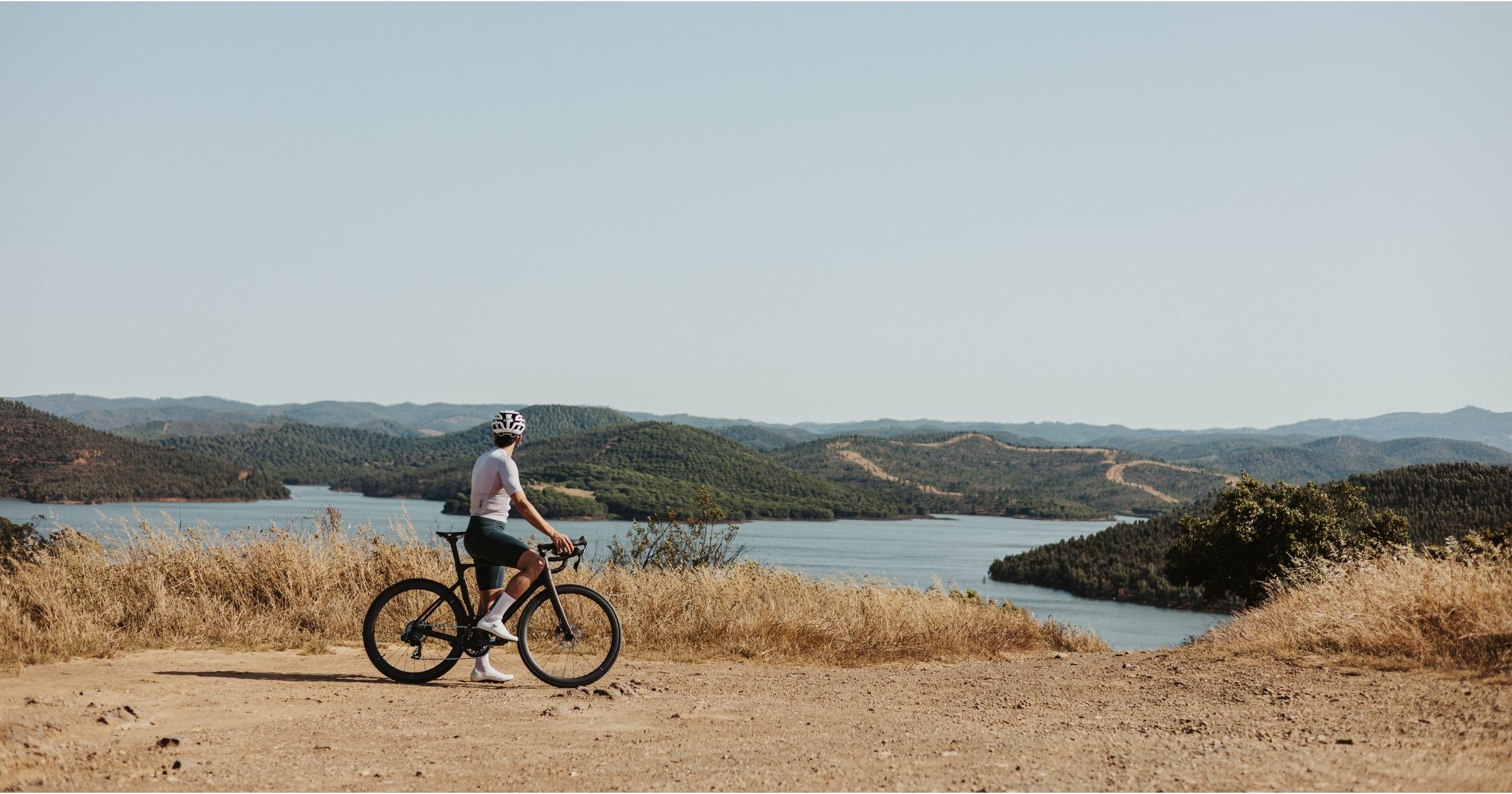
Quick Answer: The best cycling destinations in Europe for serious road cyclists are the Algarve, Mallorca, Girona, Tenerife, and the Dolomites. The Algarve is the strongest all-round choice for a winter or spring training trip – reliable weather from February through May, excellent roads, and no wasted mornings on logistics.
Europe has more rideable roads than any cyclist could cover in a lifetime. So when you are choosing where to spend a week – or a winter training bloc – the question is not really “where can I ride?” It is “where are the roads, the weather, and the logistics good enough to justify the trip?”
This is that list. Not filtered through a tourism board. Built from the roads that actually deliver – the climbs that earn their reputation, the regions where the weather holds in February, the destinations where you come back fitter and plan the next trip before you have even landed home.
Quick Overview
- Algarve, Portugal: The strongest all-round European cycling destination for a winter or spring training trip – reliable weather, excellent road quality, manageable logistics, and a long season
- Mallorca, Spain: The best choice if maximum climbing in a short window is the priority and you are comfortable with a busier riding environment
- Girona, Spain: The right base for an extended stay with serious training ambitions and an interest in professional cycling culture
- Tenerife, Canary Islands: The only option in this region for genuine high-altitude training in winter
- The Dolomites, Italy: A summer bucket-list destination, not a structured training base
- Bike Quality Matters: Whatever destination you choose, the quality of the bike under you matters more than most rental marketing suggests – ask specifically about fleet age before you book
- Velo Algarve: Delivers annually refreshed carbon road bikes to your accommodation anywhere in the Algarve – pre-fitted and ready to ride from day one
What Makes a European Cycling Destination Worth Your Time?
Before the destinations: the criteria. Because a lot of lists will put Tuscany and Provence near the top, and both are genuinely good. But “good” covers a lot of ground. If you are planning a winter training bloc, Tuscany in January is cold, wet, and the roads north of Florence are not the rolling hills the photos suggest. If you are planning a summer sportive trip, that same area in June is near-perfect.
Destination quality, for a serious cyclist, comes down to five things:
- Road Surface and Traffic Density: You can have the best climbs in Europe and they are wasted if you spend half the ride dodging lorries or nursing your wheels around potholes. The best cycling regions have roads that were built for agriculture and tourism – not freight – which means smooth tarmac and low traffic outside of July and August
- Weather Reliability: A training week lost to rain is a training week you cannot get back. The destinations worth flying to are the ones with a long, reliable riding window – ideally February through May, plus September and October
- Climbing Variety: Long base-mile roads are useful. But the destinations that come up in conversation in the changing room afterwards are the ones with proper climbs – the kind that take 45 minutes and give you a view at the top
- Logistics: How hard is it to get a race-quality bike? Can you fly direct from the UK or the Netherlands? Is there good accommodation that understands cyclists?
- Concentration of Riding: Some destinations require a car rental and an hour’s drive to find good roads. The best ones put you onto quality tarmac within 20 minutes of your front door
With those criteria in mind:
Algarve, Portugal
- Best for: Winter training blocs, Gran Fondo preparation, year-round riding
- Peak season: February – May, September – October
- Flying times: London 2h 30m, Amsterdam 3h direct to Faro, NYC ~6h 30m direct/1-stop, Toronto ~7h 30m direct to Faro
- Headline climb: Foia – 902m, the highest point in southern Portugal, reached via a 24km ascent from Portimão
- Why it works: Over 300 days of sunshine annually, 80,000+ cyclists visit each year, quiet roads outside peak season
- Tip: February to April delivers near-perfect conditions – warm, long days, roads still quiet before the resort season begins
The Algarve is the best cycling destination in Europe for a reason that is difficult to argue with. More than 80,000 cyclists visit the region every year, and with over 300 days of sunshine annually, it is easy to see why. From Lagos in the west to Tavira in the east, the Algarve puts an extraordinary concentration of quality roads within a short radius of almost any accommodation.
The headline climb is Foia – 902 metres, the highest point in southern Portugal, reached via a consistent ascent from Portimão or a more aggressive line out of Monchique. See our full Foia climb guide for the gradient data and section-by-section breakdown. It is not the longest climb in Europe but it is one of the most usable: accessible from the coast, with enough gradient variation to make it interesting without being punishing, and a descent back toward Caldas de Monchique that rewards riders willing to push on the way down. On a clear February morning with the Atlantic visible from the top, it earns its reputation.
Beyond Foia, the road options spread across the region:
The coastal road to Sagres is 50km of flat to rolling riding with Atlantic headwinds that will give a training group a proper workout – see our western Algarve cycling loops guide for the full route breakdown
The inland circuits above Tavira – through the Barrocal limestone plateau and the orange groves east of Silves – are quiet roads that most visiting cyclists never find
The Portimão F1 circuit is open for cycling and makes an oddly compelling addition to a local loop
The descent from Caldas de Monchique back toward the coast is one of the more enjoyable fast roads in the region – smooth, wide, and long enough to justify the climb
What makes the Algarve work as a destination – not just as a collection of good roads – is the weather. February average temperature in Lagos is 16-17°C. It rains, but not enough to cancel rides. March and April are near-perfect: warm, long days, roads that are still quiet before the resort season begins. September and October deliver a second peak: post-summer temperatures, empty roads, and the Gran Fondo Algarve in February for anyone who wants to race after a training week.
The logistics have improved significantly. Premium delivery-based bike rental means the question of what to ride is solved before you land. Velo Algarve delivers annually refreshed carbon road bikes – including a Cervélo Soloist – directly to your accommodation anywhere in the region, pre-fitted to your measurements with GPX provided. No shop, no pickup, no wasted morning. For a club group of eight flying from Manchester with no interest in bike bags, it is the right answer.
The Honest Negatives: No mountain ranges comparable to the Alps or Pyrenees – if you are specifically chasing Alpine-style elevation, this is not your destination. The peak season roads around Albufeira and Vilamoura are busy in summer.
The Verdict: For a winter or spring training bloc, or for a cycling holiday that combines genuine road quality with accessible logistics and reliable weather, the Algarve is the strongest destination in Europe. It is not the most dramatic or the most challenging – it is the most consistently good.
Mallorca, Spain
- Best for: Winter training camps, large groups, pro-team base camps
- Peak season: February – April
- Flying times: London 2h 15m, NYC ~7h 30m direct/1-stop, Toronto ~8h 30m direct/1-stop
- Headline climb: Sa Calobra – 9.4km, 7% average, finishing at a gorge that is genuinely dramatic
- Why it works: Density of climbing, reliable February weather, pro-team validation
- Tip: Book accommodation near Puerto Pollença or Palma months in advance – peak season fills up fast
Mallorca is the default for serious training camps, and the reputation is earned. The Sa Calobra climb – 9.4km, 7% average, finishing at a gorge that is genuinely dramatic – is one of the iconic roads in European cycling. The Puig Major is longer and heavier. The Cap Formentor coastal road is a 20km out-and-back that combines views and climbing in a way that photographs well and rides even better.
The island works because of density. You can stay in Palma, Puerto Pollença, or Can Picafort and be on quality roads within minutes. The pro teams that use it every February are not there for novelty – they are there because the roads are good, the climbing is accessible, and the weather in February is reliable enough to run a structured training week.
What Mallorca has over the Algarve: more climbing. If your target session is a 3,500m elevation day, Mallorca delivers it more easily. The north of the island is properly mountainous in a way the Algarve is not.
What the Algarve has over Mallorca: quieter roads outside the peak window, lower costs, and a less crowded feel. Mallorca in March is full of cyclists. The popular climbs have pelotons on them. If you want roads to yourself, the Algarve delivers that more reliably.
The Honest Negatives: Accommodation near the popular bases books up months in advance and costs accordingly. The roads in the cycling-popular north of the island are genuinely busy with riders from February through April – motivating or annoying depending on your preference. Bike rental quality varies considerably; bring your own or research providers carefully.
The Verdict: If your priority is maximum climbing in a week and you do not mind sharing popular routes with other training groups, Mallorca is the right choice. If you want the same road quality with quieter roads and better value, the Algarve is a stronger argument.
Girona, Spain
- Best for: Extended stays, serious training bases, road cycling culture
- Peak season: March – June, September – October
- Flying times: London 2h to Barcelona + 1h drive, NYC ~7h 30m direct/1-stop + 1h drive, Toronto ~8h direct/1-stop + 1h drive
- Headline climb: Rocacorba – 10.5km averaging 5.5%, with a nasty ramp in the final 3km
- Why it works: Professional cycling culture, dense rider community, multi-directional riding options
- Tip: A hire car is essentially required unless you are staying centrally – factor that into your logistics planning
Girona is where professional cyclists live, and that tells you something. The roads in the Empordà – rolling, well-surfaced, with the Pyrenees as a backdrop – are among the best in Europe for mixed training. The Rocacorba climb above the city is a regular benchmark test for the pros who live nearby: 10.5km, averaging around 5.5%, with a nasty ramp in the final 3km.
What Girona offers that no other destination matches: riding culture. The coffee shops near the city centre have been patronised by WorldTour riders for twenty years. The cycling community there is dense enough that you will regularly share roads with people who know exactly how to ride them. That atmosphere is real, and it affects how a training week feels.
The roads spread in every direction:
- North into the pre-Pyrenean foothills for climbing
- East toward the Costa Brava for coastal riding
- South through the plains for long base-mile days
- West for the proper mountain climbs if you want them
A rider based in Girona for a week will not run out of options.
The Honest Negatives: Girona requires a hire car unless you are staying centrally, and the transfer from Barcelona adds time to the journey. Weather in winter is colder and wetter than either Mallorca or the Algarve – March can deliver warm sunshine or a cold Tramontana wind that shuts riding down for a day. Not a winter destination in the same sense as the Iberian options.
The Verdict: Girona is the right choice for serious riders on an extended trip who want to be embedded in a professional cycling environment. For a one-week training bloc in February or March, the weather unpredictability is a risk that Mallorca or the Algarve do not carry to the same degree.
Tenerife, Canary Islands
- Best for: High-altitude training, winter sun guaranteed, serious endurance athletes
- Peak season: November – March
- Flying times: London 4h 20m, NYC ~9h – 11h with connections, Toronto ~10h – 12h with connections
- Headline climb: Mount Teide – 3,715m volcano with a paved road to 2,300m, the highest reachable point in this region
- Why it works: The only genuine high-altitude training destination in this region accessible in winter
- Tip: Only worth the extra travel time if altitude is specifically on your training plan
Tenerife is a different proposition from the other destinations on this list. The island’s riding is defined by Teide – a 3,715-metre volcano with a paved road to 2,300 metres that makes it the only genuinely high-altitude training destination in this region.
Riders who need altitude for specific physiological reasons – triathletes preparing for long-course races, riders building aerobic base at altitude – have a reason to be here that none of the other destinations can match.
The roads on the southern and eastern flanks of the island are genuinely good. The climb to Las Cañadas from the south takes you through every climate zone from subtropical to near-alpine. The descent from the crater rim back to the coast – 40km, 2,200m of descent – is an experience that stays with you.
The Honest Negatives: Tenerife is a longer flight – around 4h 20m from London versus under 2h 30m for the Algarve or Mallorca. Road quality varies significantly; the tourist-heavy south is not the same as the quiet northern roads. If altitude is not specifically on your training plan, the extra travel time is harder to justify. The riding is less varied and less concentrated than either of those destinations.
The Verdict: Tenerife earns its place for altitude-specific training in winter. For a standard road cycling week, the Algarve or Mallorca are easier arguments.
The Dolomites, Italy
- Best for: Summer bucket-list riding, Gran Fondo events, iconic Alpine passes
- Peak season: June – September
- Flying times: London 2h to Venice or Innsbruck, NYC ~8h direct/1-stop, Toronto ~8h – 10h direct/1-stop
- Headline climb: Passo dello Stelvio – 24.3km from Prato allo Stelvio, averaging 7.4% with 48 hairpin bends
- Why it works: Iconic, photogenic, unmissable Alpine passes – roads every road cyclist should ride at least once
- Tip: Plan it as a summer trip – do not try to turn it into a structured training week
The Dolomites are on this list because they are genuinely unmissable as a cycling experience – not as a training destination in the same practical sense as the others, but as roads that every serious road cyclist should ride at least once. The Stelvio, the Passo Giau, the Tre Cime – these are the roads that appear on cycling photography and stay in the memory of riders who have done them.
Passo dello Stelvio is 24.3km from Prato allo Stelvio, averaging 7.4% with 48 hairpin bends. The Giau is shorter and nastier. The Tre Cime road is a gravel-surfaced dead end at 2,400m that, on a clear day in July, is one of the most dramatic places you can arrive on a bike.
The Honest Negatives: The Dolomites are a summer-only destination in the sense that the passes are closed in winter. The roads in peak season can be busy with tourists – and the famous hairpin climbs attract cyclists from across Europe. The distance and cost to get there is higher than the Iberian options.
The Verdict: Not a training destination in the way Mallorca or the Algarve are. A bucket-list destination that every road cyclist should experience. Plan it for a summer trip and do not try to turn it into a structured training week.
Which Destination Is Right for Your Trip
The answer depends almost entirely on when you are going and what you are trying to do.
- Training Bloc in February or March: Algarve or Mallorca. Weather reliability over everything else. The Algarve gives you quieter roads and better value; Mallorca gives you more climbing
- Altitude Training in Winter: Tenerife. Nothing else in this radius delivers altitude in February
- Summer Bucket-List Week: Dolomites or the Algarve coast for a different kind of riding. The Dolomites for passes; the Algarve for coastal routes and a more relaxed pace
- Gran Fondo or Event-Based Trip: The Algarve in October for the Gran Fondo Algarve, or Mallorca for its spring events. Both deliver a quality race experience on good roads
- Extended Stay or Base for Serious Training: Girona or the Algarve. Girona gives you world-class road cycling culture, endless climbing options, and access to the Pyrenees, but you will need a hire car and some tolerance for occasional bad weather. The Algarve offers over 300 days of sunshine, quieter roads, lower living costs, and reliable winter riding conditions that make long training blocks far easier to plan consistently
What to Look for in Road Bike Rental at Any Destination
If you are travelling alone rather than with a group, the calculation shifts – see our guide to the best cycling vacations for solo riders for destination picks specifically suited to riding without a group around you.
Whatever destination you choose, the bike matters. Seriously. Renting something that was last serviced two seasons ago and does not fit properly will affect how every ride feels and cost you watts you have spent months building. A great riding destination can feel average on a bad rental bike.
Prioritize Bike Quality
The standard to hold rental providers to is relatively simple: current-season fleet, electronic shifting, modern carbon frames, a genuine fitting process before delivery, and equipment you would not be embarrassed to roll up to a group ride on. If the rental company avoids mentioning bike model years or component specs, that is usually a sign to keep looking.
A good road bike rental should feel as close as possible to your setup at home. That means correct frame sizing, proper saddle height, suitable gearing for the local terrain, and quality wheels and tyres that are maintained properly.
Ask About Fit and Setup
Fit matters more than brand decals. The best operators will ask for your height, inseam, current bike setup, and even stem length preferences before the bike is prepared. Some will request your bike fit measurements directly from a recent fitting report or bike computer app.
In the Algarve, Velo Algarve is the benchmark for this level of service. Their fleet includes current Cervélo Soloist models, the bikes are replaced annually, and delivery is handled directly to your hotel or accommodation with measurements confirmed before the bike is loaded. That level of preparation makes a noticeable difference on long climbing days and back-to-back rides.
Research Local Rental Operators Carefully
Not every destination has the same rental standards. In Mallorca, many of the better operators are based around Puerto Pollença and Palma, but quality varies significantly between companies. Before booking, ask specifically:
- What year are the bikes?
- When was the drivetrain last replaced?
- Are pedals included?
- Can they swap stems or saddles if needed?
- What happens if there is a mechanical issue mid-rental?
Those details matter a lot more once you are halfway through a mountain ride 40km from town.
The Best Cycling Destination Is the One You Will Actually Ride
The best cycling destinations in Europe are not always the most famous ones. The right choice depends on the kind of riding you want, the time of year, and how much of your trip you want to spend training versus dealing with logistics. Mallorca delivers iconic climbs. Girona delivers culture and long-term riding depth. Tenerife delivers altitude. The Dolomites deliver unforgettable summer passes.
But for the best balance of weather reliability, road quality, logistics, and consistent riding from day one, the Algarve remains the strongest all-round option for most serious cyclists.
If you are planning a cycling trip to the Algarve, Velo Algarve delivers premium carbon road bikes directly to your accommodation anywhere in the region – pre-fitted, professionally maintained, and ready to ride the moment you arrive.
Frequently Asked Questions
What is the best cycling destination in Europe?
For a winter or spring training bloc, the Algarve is the strongest all-round choice – reliable weather, excellent road quality, and quieter roads than Mallorca. For maximum climbing in a short window, Mallorca is the right answer. For professional cycling culture and extended stays, Girona. Each destination earns its place for different reasons.
When is the best time to cycle in the Algarve?
February through May and September through October are peak cycling months. March and April deliver near-perfect conditions – warm, long days, and roads that are still quiet before the resort season begins. The region averages over 300 days of sunshine annually, making it one of the most reliable winter cycling destinations in Europe.
Algarve or Mallorca for cycling?
Both are excellent. Mallorca offers more climbing density and the iconic Sa Calobra climb, but the roads get genuinely busy with cycling groups from February to April. The Algarve offers quieter roads, lower costs, and better value, with Foia as its headline climb. For a first European cycling trip, the Algarve is usually the easier argument.
Do I need to bring my own bike or can I rent one?
Quality road bike rental is widely available in all the major European cycling destinations, but standards vary significantly. The best operators offer current-season carbon bikes with electronic shifting, replaced annually, and a proper fitting process before delivery. In the Algarve, Velo Algarve delivers pre-fitted carbon road bikes directly to your accommodation – removing the hassle of travelling with a bike bag.
Is Tenerife worth the extra flight time for cycling?
Only if altitude training is specifically on your plan. Teide is the only paved road in this region that climbs to 2,300m, making it the genuine high-altitude option for winter training. For a standard road cycling week, the Algarve or Mallorca are shorter flights with more concentrated riding.
Sorry, the comment form is closed at this time.