
Ride Stats
Distance: 75km | Elevation: 1,100m | Ride time: 3-4 hours | Difficulty: Challenging | Surface: Tarmac
Quick Answer
Into the Serra do Caldeirão is one of the most underrated climbing days in the Algarve at 75km and 1,100m of elevation. North through the whitewashed village of Estoi into the Serra do Caldeirão via São Brás de Alportel, long, consistent climbing on smooth asphalt with almost no traffic on roads that most cyclists based on the central coast never find. Yellow Bourbon in Faro is the pre-ride start. Circular in São Brás de Alportel is the turnaround café.
Quick Overview
- The Approach: North from Faro through the whitewashed village of Estoi before the gradient builds steadily into the Serra do Caldeirão, the roads improve and the traffic drops almost immediately above the city
- Pre-Ride – Yellow Bourbon (Faro): Specialty coffee, artisanal brunch, and homemade pastries in Faro, the natural pre-ride start before heading north through Estoi
- The Climbing: Long, consistent gradient on smooth asphalt above Estoi, one of the best sustained climbing roads in the central Algarve with almost no traffic throughout
- Turnaround – Circular (São Brás de Alportel): Café and community space known to cyclists for its fresh homemade focaccia, the natural turnaround stop at the top of the climb before the return south
- The Return: South via the same road or loop back through the interior for a different line home, either way the descent is fast and the road surface is excellent throughout
- From Loulé: The initial kilometres are already at altitude, a shorter approach with the climbing starting almost immediately from the town centre
The Climbing Road Nobody Finds
Most riders based in Faro or Loulé head west toward Portimão and the Foia summit for their climbing day. Into the Serra do Caldeirão goes north instead, through Estoi and up into the hills above São Brás de Alportel on roads that see almost no cycling traffic and offer consistent, sustained climbing on some of the best asphalt in the central Algarve.
At 75km and 1,100m it is a properly challenging day without the longer coastal approach that Foia requires. The gradient builds steadily above Estoi and the upper sections near São Brás are the most demanding, no single savage ramp, just consistent climbing that accumulates. Circular in São Brás is the natural turnaround, the focaccia is worth the climb, and the descent south on the same roads is fast and enjoyable.
Route Profile
North from Faro through the whitewashed village of Estoi. The gradient begins properly above the village and builds steadily as São Brás approaches.
Pre-Ride – Yellow Bourbon (Faro)
Yellow Bourbon opens at 8:30am and is the natural pre-ride stop for riders based in Faro before heading north through Estoi. Specialty coffee, artisanal brunch, and homemade pastries, take the time for a proper breakfast before the climb. The approach from Faro to Estoi is the warm-up.
Through Estoi
The whitewashed village of Estoi is the first landmark north of Faro, a natural early marker before the gradient begins in earnest. Above Estoi the road improves and the traffic drops to almost nothing. The climbing is consistent from here to São Brás, no sharp ramps, just sustained gradient on smooth asphalt.
The Serra do Caldeirão
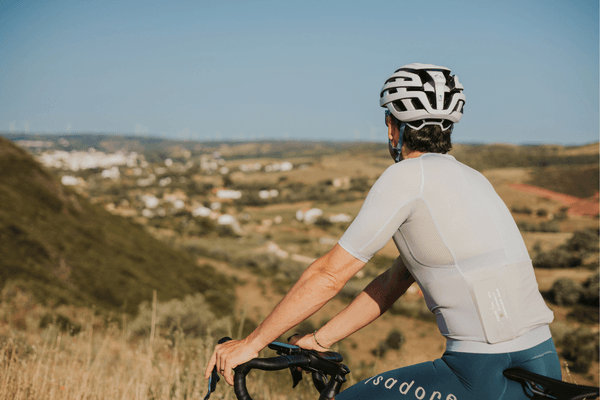
Above Estoi the road climbs consistently into the Serra do Caldeirão. The landscape changes as the altitude increases, cork oak, cistus, and limestone countryside that has nothing to do with the resort coast below. The upper sections near São Brás are the most demanding. Most riders find this climb harder than the gradient numbers suggest, it is the sustained nature of it, not any single sharp section, that makes it work.
Turnaround – Circular (São Brás de Alportel)
Circular in São Brás is the turnaround café, freshly made focaccia, good coffee, and a stop that knows what it means to have cyclists arriving after a climb. The outdoor seating has bicycle stands and the welcome for riders in kit is genuine. Stop properly here before the return south.
The Return
South on the same road or loop back through the interior for a different line. Either way the descent is fast on excellent road surfaces, the return to Faro or Loulé is straightforward and enjoyable.
What You Will Need
- Four gels minimum, sustained climbing from near sea level needs consistent fuelling throughout
- Two bottles, refill at Circular in São Brás before the return
- An early start, the climb is best done in the cooler morning hours before the upper section heats up in summer
Best Time to Ride
February through May and September through November. The climb is rideable year-round but the upper section gets hot in summer, start early if riding in July or August. The approach through Estoi and the cork oak countryside above São Brás is at its best in spring when the wildflowers are out across the limestone hillside.
Key Takeaways
- 75km with 1,100m of elevation, the climbing benchmark of the Rising Roads set
- Runs through Estoi into the Serra do Caldeirão above São Brás de Alportel
- Sustained rather than sharp climbing, with the most demanding section near São Brás
- Best ridden February to May or September to November
- Accessible from both Faro and Loulé, with the Loulé approach starting climbing almost immediately
Book the Bike. We Will Handle the Rest.
The Rising Roads’ climbing benchmark, the road most riders in Faro and Loulé never find. Your Cervélo Soloist delivered to Faro or Loulé, pre-fitted, pre-loaded with the route, and ready to ride. Visit Velo Algarve to see how delivery-only road bike rental works across the region.
Book your bike with Velo Algarve →
Frequently Asked Questions
Is Faro a practical base for serious road cyclists?
Yes, more than most people realise. The roads north through Estoi are quiet and well-surfaced within 10km of the city centre. Airport delivery is available, which means the bike can be ready the same day you fly in. See the Faro location page for delivery details.
How does the Loulé approach differ from Faro?
Loulé sits at 200m in the interior, the initial kilometres from Loulé are already at altitude, which shortens the approach and changes the climbing profile. From Loulé the route to São Brás feels like interior riding from the start rather than a gradual ascent from the coast. Both bases are good. The experience is different.
Are there any steep sections on this route?
The route is consistently climbing rather than featuring one very steep section. The gradient builds gradually above Estoi and the upper sections near São Brás are the most demanding, there are no extended sections above 12%. It is sustained rather than sharp, which is what makes it accumulate.
Can I combine this with the Volta Roads in the same week?
Yes, they are complementary. Into the Serra do Caldeirão heads north-east through Estoi. The Volta Roads go north-west through Boliqueime and the Loulé interior. Different directions, different roads, different climbing profiles. Both are accessible from the same Rising Roads base.
What are the three Rising Roads routes?
Into the Serra do Caldeirão (north through Estoi to São Brás, 75km, 1,100m), the Volta Roads (north through Boliqueime to the Barranco do Velho, 80km, 1,100m), and the Lagoon Corridor (west along the Ria Formosa to Quinta do Lago, 35km, 225m). Three completely different days from the same Rising Roads base.
No Comments