Ride Stats
Distance: 72km | Elevation: 1,200m | Ride time: 2:30 – 3:30 hours | Difficulty: Hard | Surface: Tarmac
Quick Answer
The Foia climb from Portimão is the Algarve’s signature ride — 72km, 1,200m of elevation, and the highest paved road in southern Portugal at 902m. The climb itself is 16km from Monchique at 4.9% average, with ramps past 11%. Allow 2:30 to 3:30 hours of ride time. The Volta ao Algarve finishes here every February. Now it is your turn.
Quick Overview
- The Climb: 16km from Monchique village to the summit at 902m, averaging 4.9% with ramps past 11%
- Stop 1 — Café Velochique (Km ~40): The go-to cycling café in the Algarve, perfect for a proper post-climb lunch
- The N267 Detour: One of Brad’s favourite roads in the Algarve — sweeping views, mid-mountain riding, almost no traffic
- Stop 2 — Taberna Do Manel (Km ~55): Traditional Portuguese café for a final galão before the run home
- Best Season: February to May and September to October. Summer rides should start early to beat the heat
- Race Pedigree: Foia is the finishing climb of the Volta ao Algarve, ridden by the WorldTour peloton every February
- Velo Algarve: Delivers annually refreshed carbon road bikes to your accommodation in Portimão — pre-fitted and ready for the climb
The Algarve’s Signature Climb
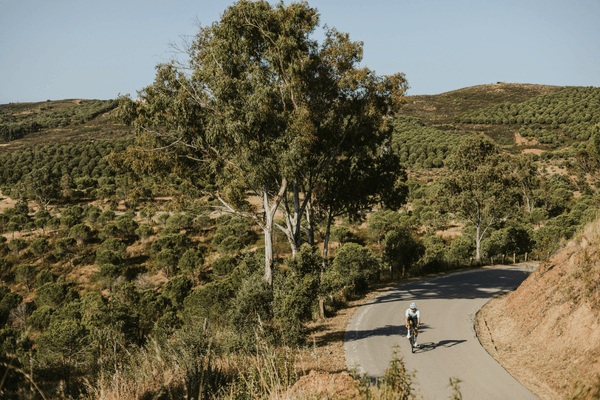
The Algarve’s signature climb and the most coveted road in the region. From Portimão, the route rolls north through the Monchique foothills before the real climbing begins — 16km to the summit at 902m, with gradients averaging 4.9% and sections pushing past 11%. On a clear day the view from the top stretches all the way to Sagres and the coast. The Volta ao Algarve finishes here every February. Now it is your turn.
This is a ride best done with intent: get the climb done first, then earn your lunch.
Route Profile
Roll out of Portimão heading north on quiet back roads through the Monchique foothills. The terrain undulates for the first stretch — a proper warm-up that lets the legs come around before the work begins. Push past Monchique village and straight onto the climb.
The Climb — Monchique to Foia
From Monchique village, the road tilts up and doesn’t relent for 16km. Average gradient 4.9%, with ramps pushing past 11% in the upper sections. The road surface is clean, the corners are sweeping, and the air cools noticeably as you climb toward 902m. On a clear day the summit gives you the entire western Algarve — the coast unrolling all the way to Sagres.
This is the finish line of the Volta ao Algarve every February. Take a photo. Catch your breath.
Stop 1 — Café Velochique (Km ~40)
Descend back through Monchique and roll into Velochique with the hard work done. The go-to cycling café in the Algarve, and the right place to refuel properly. The brunch menu runs until 12:00 — the oatmeal pancakes are a local favourite — and a deli-style lunch menu with sweets and specialty coffee is available all day. With the climb already in the legs, this is where lunch is properly earned.
The N267 Detour — Brad’s Road
Heading back toward Portimão, take the slight detour onto the N267 — one of Brad’s favourite roads in the Algarve. The road traces the mid-line of the mountain, with sweeping views across the range and almost no traffic. It is the kind of road you ride slowly on purpose.
Stop 2 — Taberna Do Manel (Km ~55)
After the big descent off the N267, around the 55km mark, you will find Taberna Do Manel – Honey & Café. A traditional Portuguese spot, another of Brad’s favourites, and the perfect final stop before the run home to Portimão. Order a galão, sit outside, take your time.
What You Will Need
- Climbing legs — or at least the willingness to find them
- Two bottles minimum; refill in Monchique
- Four gels — two for the climb, two more in the pocket depending on where you stop
- A gilet in the winter for the descent — it is cooler at 902m than you think
Best Time to Ride
February through May and September through October are peak. In the summer, leave early to beat the heat — an early roll-out makes the climb and the coffee that much better.
Book the Bike. We Will Handle the Rest.
Velo Algarve rents the highest-performance, fastest, best-maintained bikes in the Algarve — perfect for Foia. Lighter wheels, sharper shifting, and a bike dialled in for climbing will make every one of those 16km to the summit feel a little easier. Delivered to your door in Portimão, pedals fitted, tires checked, ready to ride.
Book your bike with Velo Algarve →
Frequently Asked Questions
How hard is the Foia climb?
The climb itself is 16km at 4.9% average gradient, with sections pushing past 11%. It is a sustained effort rather than a brutal one — comparable in difficulty to a mid-tier Mallorcan climb. Fit recreational riders complete it in 1:15 to 1:45; trained cyclists in under an hour. The full 72km route takes most riders 2:30 to 3:30 hours.
Is the road to Foia good for cycling?
Yes. The road surface from Monchique to the summit is clean and well-maintained, the corners are sweeping, and traffic is light outside of peak summer weekends. It is one of the most popular cycling climbs in southern Europe for a reason.
What is the best time of year to ride Foia?
February through May and September through October deliver the best conditions — warm, long days, light traffic. The Volta ao Algarve finishes on Foia in February, when conditions are typically near-perfect. In summer, start before 9am to beat the heat on the climb.
Do I need to be an experienced cyclist to ride this route?
You need to be comfortable with 70+ km rides and a sustained 16km climb. It is not a beginner route, but it is well within reach of any fit recreational cyclist who has done some climbing. The descent is fast but the road is wide and the corners are sweeping.
Can I rent a bike for the Foia climb?
Yes. Velo Algarve delivers annually refreshed carbon road bikes directly to your accommodation in Portimão — pre-fitted, professionally maintained, and ready to ride. For a climb like Foia, a properly maintained bike with sharp shifting and the right gearing makes a meaningful difference.
No Comments